
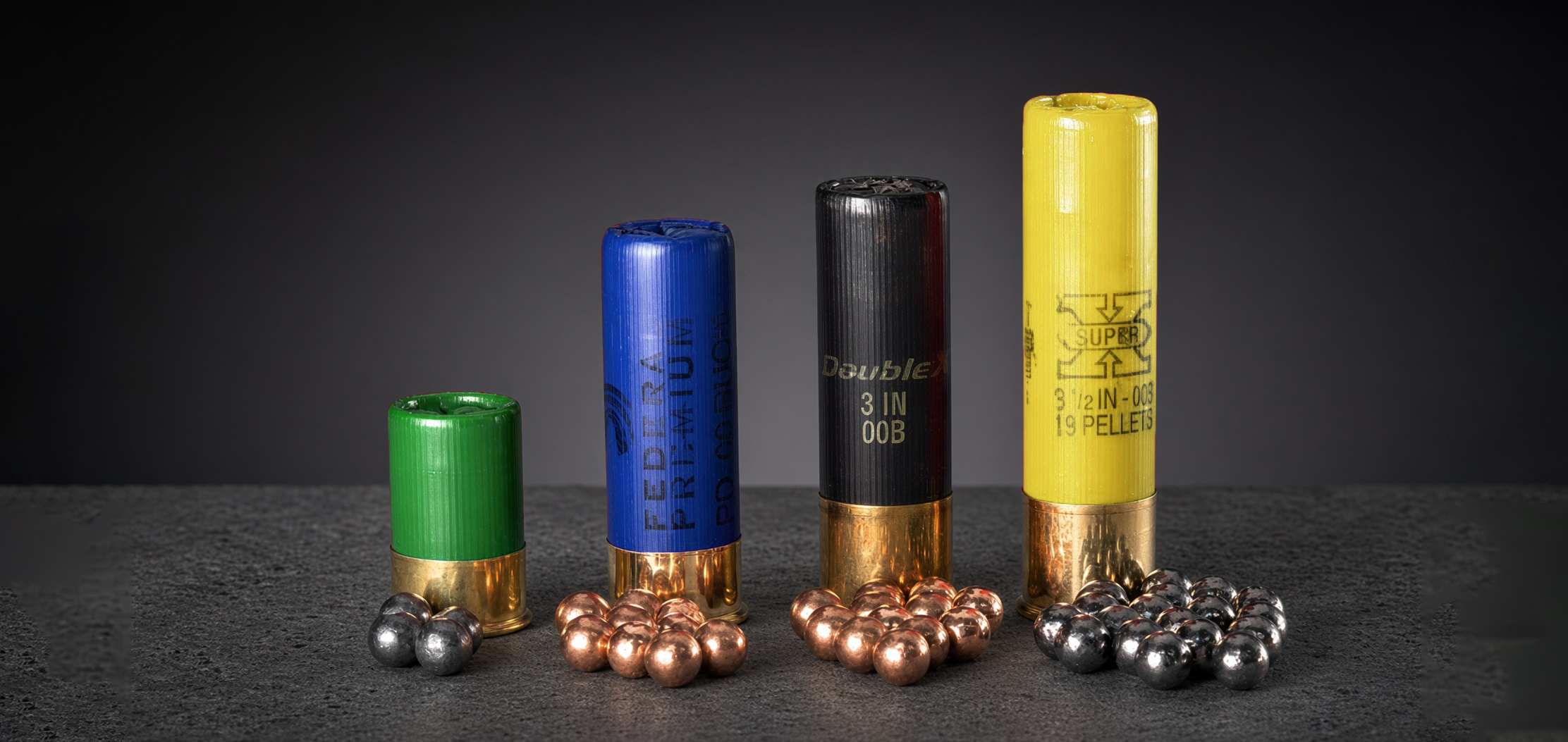
Buckshot Explained: Sizes, Pellet Counts and Range
Buckshot sizes from #4 to 000 buck, pellet counts from Federal specs, effective range for deer, and why the same size can carry a different count.
Read the articleLatest from Popular Ammo
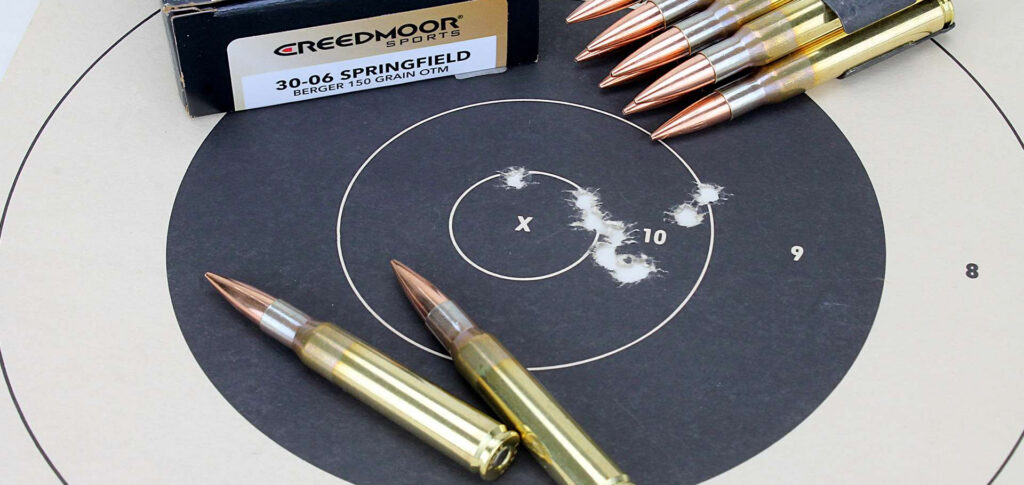 30-06 Ammo: Bullet Weights, Velocity and the Garand Question30-06 ammo by the numbers: SAAMI pressure, 150 vs 180 grain factory ballistics, recoil against .308, and whether commercial loads are safe in an M1 Garand.Read the article
 300 Blackout Ammo: Supersonic vs Subsonic Loads Explained300 Blackout ammo comes in two families: supersonic 110 to 150 grain loads and subsonic 190 to 220 grain loads. SAAMI specs, factory velocities and the 5.56 warning.Read the article
 45-70 Ammo: The Three Pressure Levels ExplainedEvery 45-70 round fits every 45-70 rifle; not every round is safe in one. The three pressure tiers, in the ammunition makers' own published words.Read the article
 44 Magnum Ammo: Ballistics and Barrel LengthOne 44 Magnum load runs 1,466 fps from a 4-inch revolver and 1,935 from a 20-inch carbine. Published ballistics, barrel lengths and firearm restrictions.Read the article
 30-30 Ammo: Ballistics, Bullets and Lever GunsWhy 30-30 bullets are flat-nosed, what elastomer tips changed, and the published ballistics for every current load — with the test barrels named.Read the article
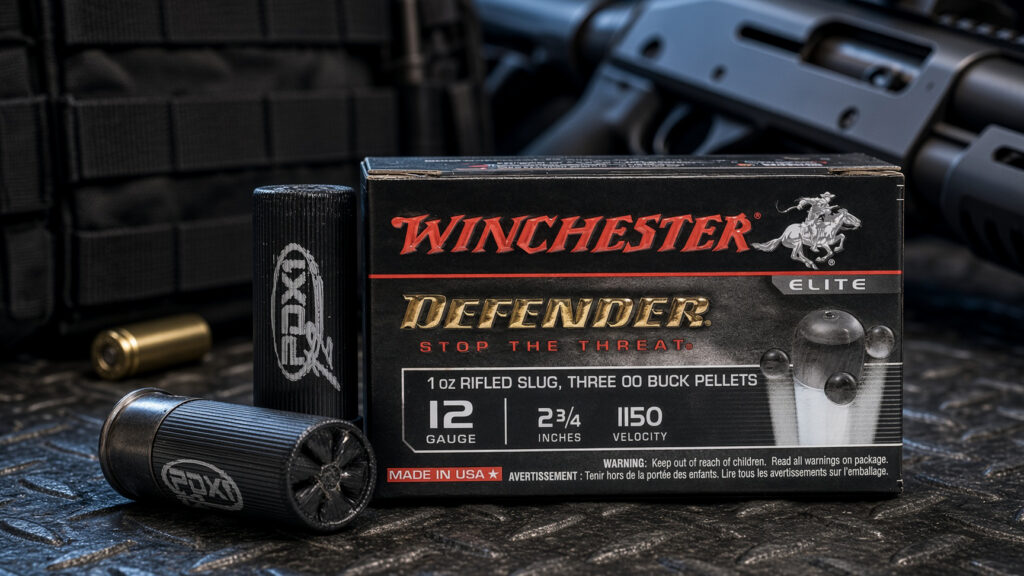 12 Gauge Shotgun Shells: Sizes, Loads and the LawA shell too long for your chamber still fits — and raises pressure. Shot sizes, published loads, and what federal law actually requires for waterfowl.Read the article
Ammo Charts & Quick Answers

Caliber comparison chart
| Cartridge | Bullet | Muzzle energy |
|---|---|---|
| 9mm Luger | 115 gr | ~360 ft-lb |
| .45 ACP | 230 gr | ~370 ft-lb |
| 5.56 NATO | 62 gr | ~1,300 ft-lb |
Bullet sizes, velocity and energy for the common handgun, rifle and rimfire cartridges, side by side.
Open the chart →

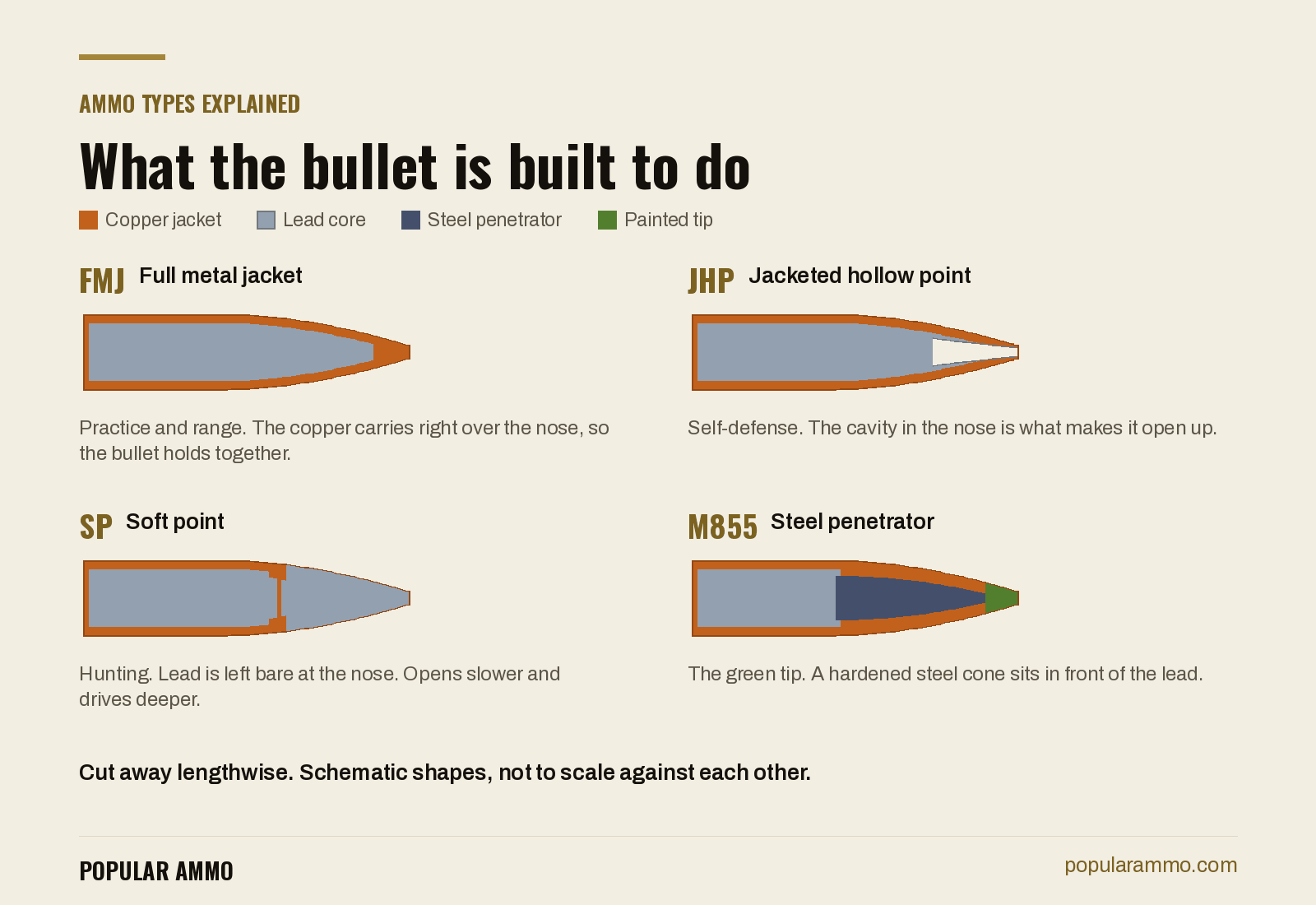
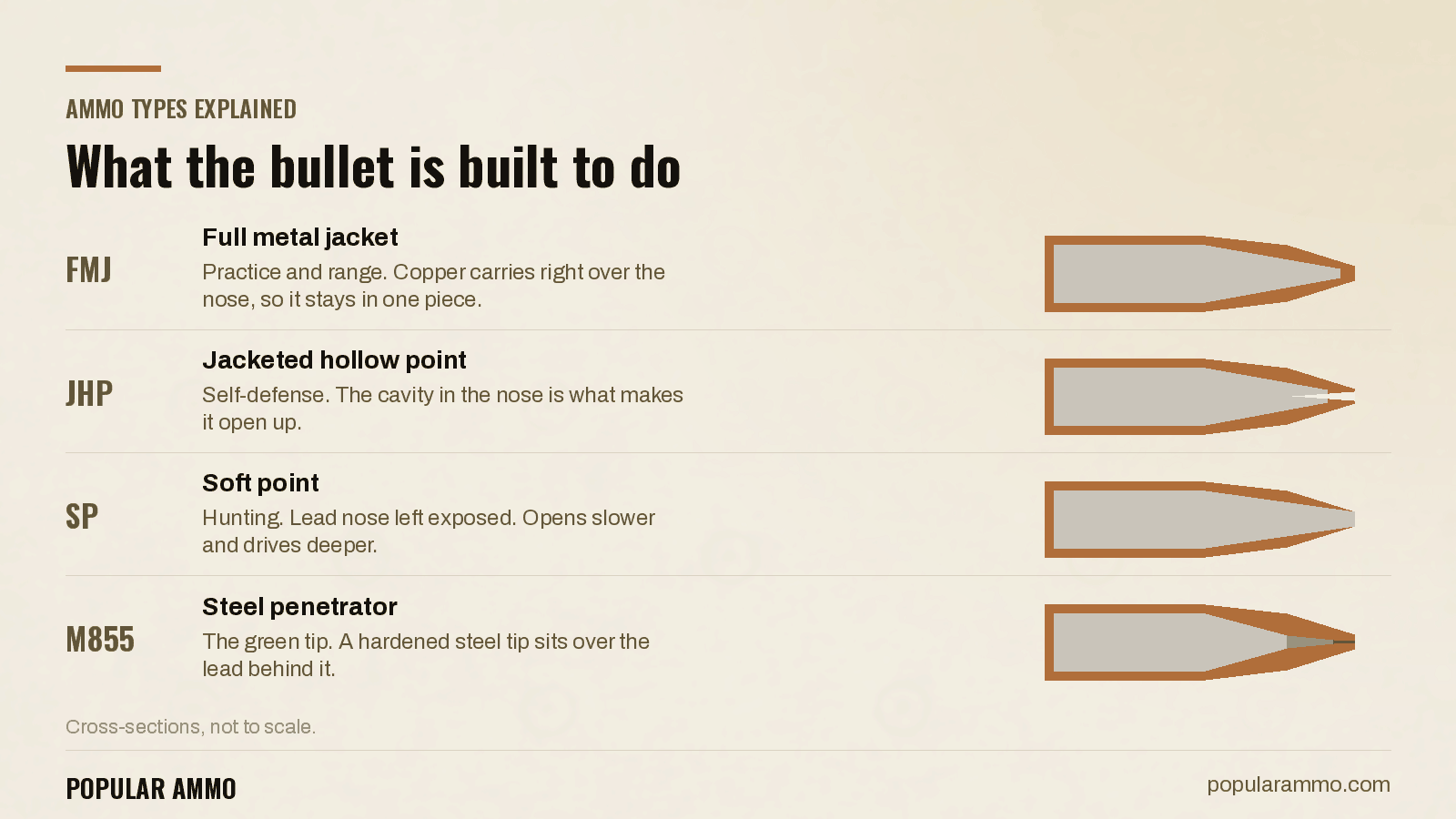
Ammo types explained
| Type | What it is for |
|---|---|
| FMJ | Practice and range |
| JHP | Self-defense |
| Subsonic | Suppressed shooting |
FMJ, JHP, soft point, ballistic tip, subsonic and frangible — what each one is built to do, and when it is the wrong choice.
Read the guide →

Ammo price & supply tracker
| Checked | Finding |
|---|---|
| Supply | No shortage |
| Price | The real problem |
| Prices | Read by the site several times a day, one retailer |
| Supply and policy | Checked by hand, dated |
Per-round prices read automatically from one retailer’s product pages, plus FBI background-check data and the tariff story, each with the date it was last checked.
Check current prices →

Caliber comparisons
The published numbers people use to compare cartridges are not measured the same way. Different standards bodies test at different points on the case and in different barrel lengths, which is why two rounds with the same pressure rating can look far apart on a spec sheet. Each comparison below shows the measurement difference first, then what it means at the muzzle.
| Comparison | The measurement problem |
|---|---|
| .223 Remington vs 5.56 NATO | SAAMI, NATO EPVAT and CIP each measure chamber pressure at a different point on the case, so the published figures are not directly comparable. CIP rates .223 Remington at 62,366 psi — the number often quoted as proof 5.56 runs hotter. |
| 300 Blackout vs 5.56 NATO | Identical 55,000 psi SAAMI maximum average pressure. SAAMI tests 300 BLK in a 16-inch barrel and .223 in a 24-inch barrel, which is most of the velocity gap people attribute to the cartridges. |
| .380 ACP vs 9mm Luger | 21,500 psi vs 35,000 psi SAAMI maximum — a 1.63× ratio, not the “double” that gets repeated. SAAMI also tests them in 3.75-inch and 4.0-inch barrels. |
| 9mm Luger vs .45 ACP | SAAMI test barrels are 4.0 inches for 9mm and 5.0 inches for .45 ACP. The FBI’s 1989 and 2014 papers reach opposite conclusions on whether bullet diameter matters, and neither acknowledges the other. |
| 6.5 Creedmoor vs .308 Winchester | SAAMI sets both at 62,000 psi. CIP does not (4,350 bar vs 4,150 bar), and published velocity data uses different barrel lengths again. |
Ammunition reference desk
Three charts readers come back to: what a round costs today, what a cartridge name really measures, and what shipping and tax add.
| .22 LR | 6.59¢ |
| 9mm Luger | 26.98¢ |
| 5.56 NATO | 44.95¢ |
| .270 Win | .278 in |
| .30-30 Win | .309 in |
| .308 Win | .309 in |
| Case price | $269.80 |
| Shipping and tax | +$18.89 |
| Per round | 28.87¢ |
Reader Favorites