45-70 Ammo: The Three Pressure Levels Explained
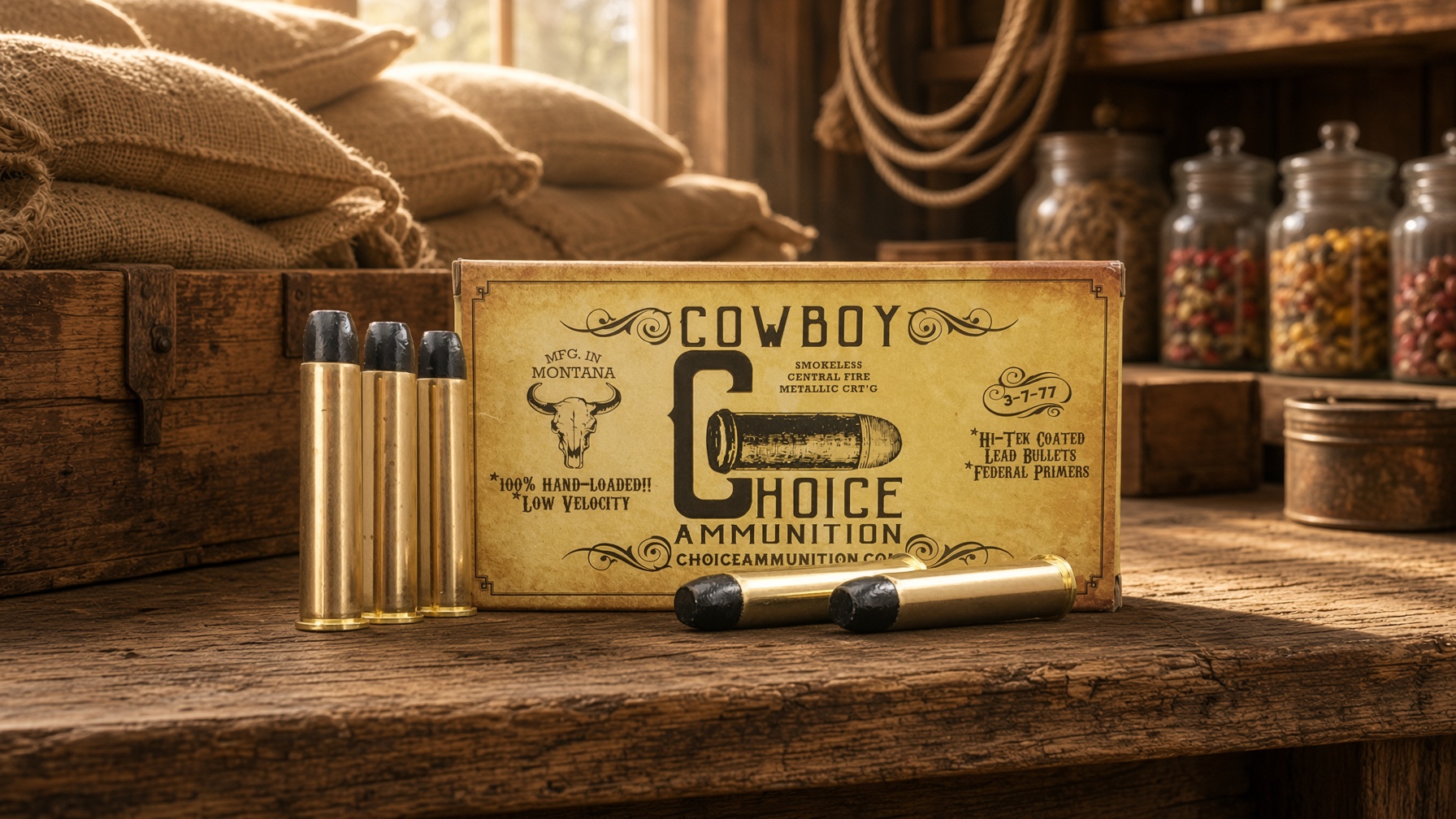
45-70 is not one cartridge but three pressure levels sharing one case, and every round chambers in every rifle even where it is not safe.
Last updated: October 6, 2026 · Originally published September 11, 2026
I have had customers bring three different boxes of 45-70 to my counter thinking they were interchangeable. They are not. 45-70 ammo is really three pressure levels sharing one case, and the box will not always tell you which one you are holding. Every round chambers in every .45-70 rifle. Not every round is safe to fire in every .45-70 rifle. Remember that, because it governs everything else on this page.
What I want you to walk away with
- SAAMI sets one maximum average pressure for 45-70 ammo: 28,000, and unusually it is the same number in both systems — 28,000 CUP and 28,000 psi.
- Manufacturers load well below and well above that figure and publish firearm lists to match. Garrett publishes a three-step ladder at 18,000, 28,000 and 35,000 CUP.
- SAAMI’s own standard carries a footnote that its calibration band “does not conform to the standardized guidance due to testing done on ammunition loaded to 18,000 psi.” That is the Trapdoor problem, recorded in the standard itself.
- Published muzzle velocities for a 405-grain bullet run from 1,330 fps to 2,002 fps depending on which tier you buy.
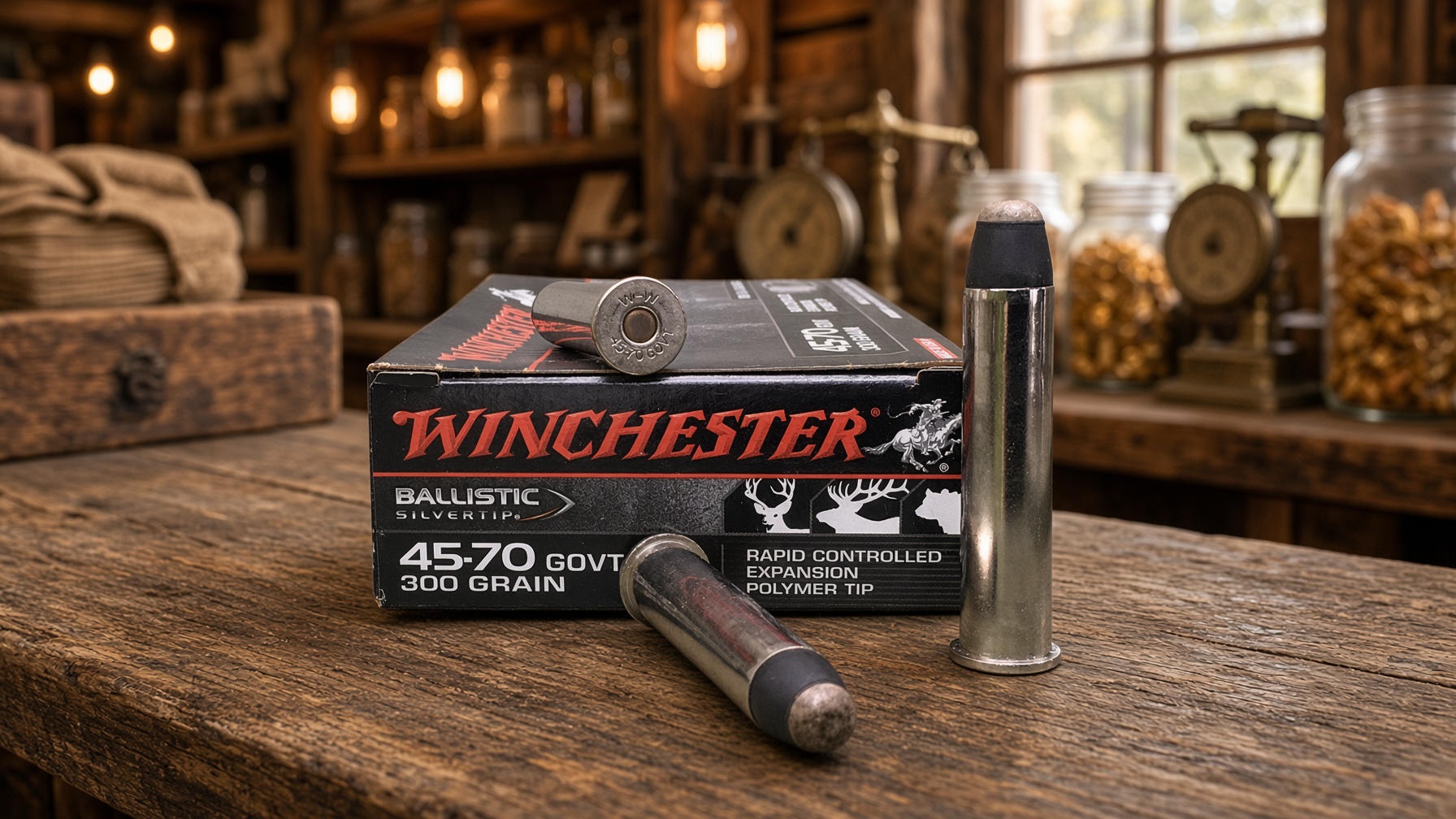
- Winchester currently publishes no ballistics at all for its 45-70 loads — its product pages say so outright.

Here is how I read this chart
Every number in this table is a published figure, copied from the source named underneath it — none of it is my own measurement. Read across a row to compare one entry, and down a column to compare them all on the same measure.
What is 45-70 ammo?
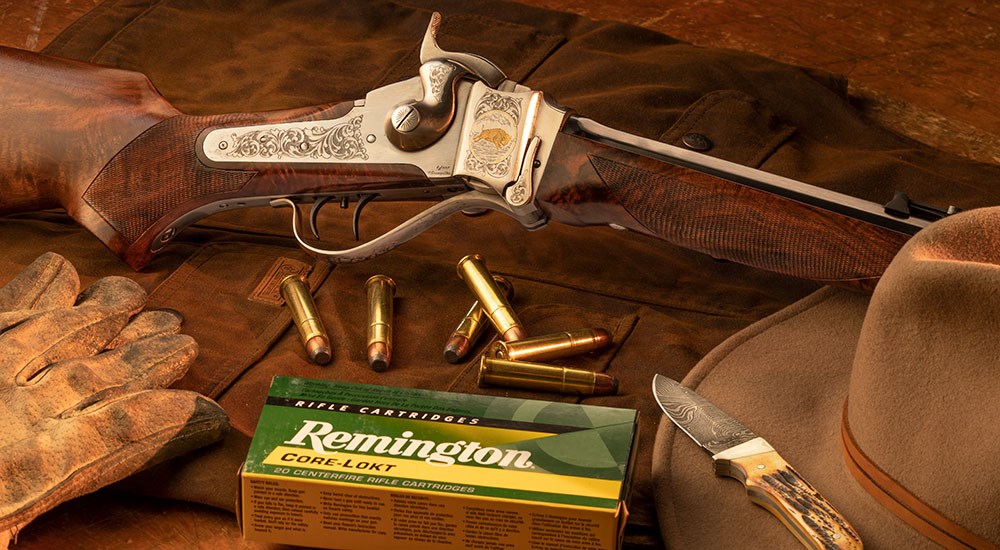
The .45-70 Government dates to the U.S. Army’s adoption of the Model 1873 Springfield. The National Park Service’s Springfield Armory history describes the cartridge plainly: “A new cartridge was adopted, the .45″-70-405, meaning that it was .45″ caliber, contained 70 grains of black powder and a bullet weighing 405 grains.”
Everything that makes 45-70 ammo confusing today follows from that sentence. The case was designed for black powder in a single-shot rifle with a hinged breech. Modern lever guns and falling blocks are far stronger. Ammunition makers load for both, in the same case, with the same external dimensions.

Quick answers
Is all 45-70 ammo safe in my rifle?
No. All of it will chamber. Buffalo Bore states the position exactly: “Our 45-70 ammunition is externally identical to SAAMI spec 45-70 ammo, but internally it generates FAR more power and pressure. So, our 45-70 ammo will fit into ANY 45-70 firearm but is not safe in every 45-70 firearm.” Read the box and the maker’s firearm list before you load.
What is the difference between the three pressure tiers?
Roughly: a Trapdoor-safe level around 18,000 CUP, the SAAMI level at 28,000, and a modern-actions-only level at 35,000 CUP and above. Garrett Cartridges publishes all three as separate products with the chamber pressure printed on each.
What does 45-70 ammo do at distance?
It sheds velocity quickly. Hornady’s 325-grain LEVERevolution leaves at 2,000 fps and is down to 1,197 fps at 300 yards. Garrett describes its +P load as effective “out to about 225-yards” from a 22-inch barrel.
Can I shoot modern 45-70 ammo in an original Trapdoor Springfield?
Not the high-pressure loads. Garrett, Buffalo Bore and Underwood all publish explicit prohibitions in capital letters. Buffalo Bore goes further and disagrees with the standard itself — see below.
Why do makers publish such different velocities for the same bullet weight?
Two reasons stacked: the pressure tier, and where the figure was measured. SAAMI’s rifle standard requires a 24-inch test barrel. Buffalo Bore and Garrett publish from real rifles instead — 22-inch and 18.5-inch barrels, named on the page.
What does SAAMI specify for 45-70 ammo?
| Specification | Value |
|---|---|
| Bullet diameter | .458 − .003 in |
| Case length | 2.105 − .020 in |
| Cartridge overall length | 2.490 in min – 2.550 in max |
| Rim diameter | .608 − .010 in |
| Bore / groove diameter | .450 in / .456 in, 6 grooves |
| Rifling twist | 1 turn in 20 in, right hand — marked OPTIONAL |
| Maximum average pressure, crusher | 28,000 CUP (405 gr reference bullet) |
| Maximum average pressure, transducer | 28,000 psi |
| Standard test barrel | 24 in — SAAMI: “All standard test barrels shall be 24 inches long” |
Two things here are unusual enough to be worth stating outright. First, .45-70 is one of the few cartridges where the copper-crusher and transducer limits carry the same number, and Buffalo Bore leans on that in print: “conveniently, the 45-70 is a cartridge that basically does” convert straight across. Second, SAAMI’s own standard carries this footnote: “The calibration band for the 45-70 Gov’t does not conform to the standardized guidance due to testing done on ammunition loaded to 18,000 psi.” The 1873 rifle is visible inside the modern standard.
The three pressure tiers of 45-70 ammo, in the makers’ own words
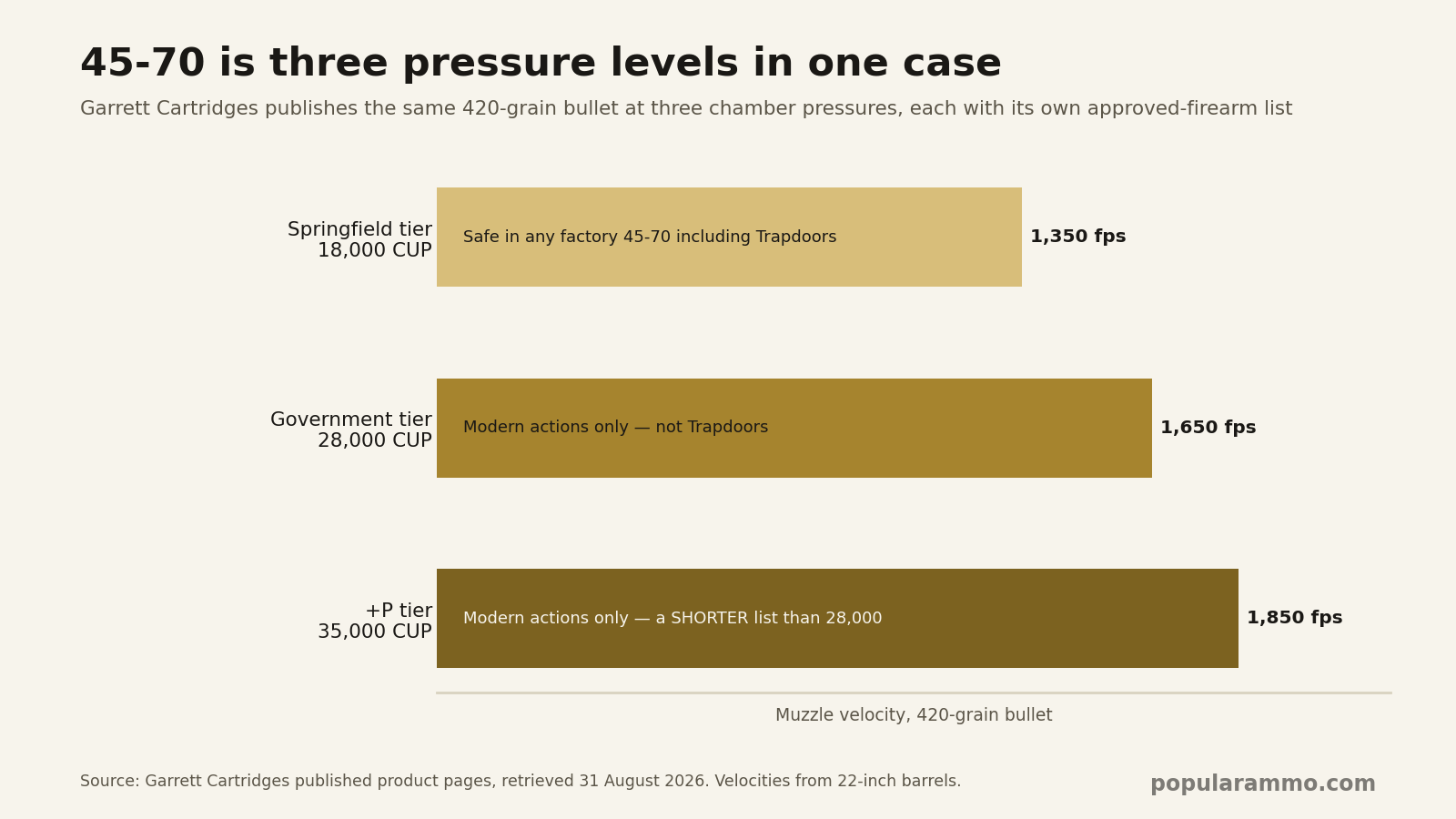
Here is how I read this chart
Three bars, three versions of the same ammunition. CUP is a way of measuring how much pressure builds inside the gun when the round goes off, and the three numbers are three deliberate levels. Read down the bars and you can see the trade: more pressure buys more speed, and each step up removes rifles from the list the maker says the ammunition is safe in. If you own an original Trapdoor Springfield, only the top bar applies to you.
Garrett Cartridges publishes the cleanest version of the ladder, because it sells the same 420-grain bullet at three pressures and prints the chamber pressure on each product.
| Tier | Chamber pressure | Velocity / energy | Published firearm scope |
|---|---|---|---|
| 45-70 Springfield | 18,000 CUP | 1,350 fps / 1,700 ft-lb | “ANY FACTORY CHAMBERED 45-70 FIREARM IN GOOD CONDITION INCLUDING TRAPDOORS AND REPLICAS” |
| 45-70 Government | 28,000 CUP | 1,650 fps / 2,540 ft-lb | Modern rifles listed by name. “UNDER NO CIRCUMSTANCES SHOULD THIS AMMO BE FIRED IN ANY TRAPDOOR SPRINGFIELDS” |
| 45-70 +P | 35,000 CUP | 1,850 fps / 3,200 ft-lb | A shorter list than the 28,000 tier — Marlin, T/C Contender, Kodiak MK-IV, C. Sharps and BFR revolvers are dropped |
Notice what happens between the second and third rows. Raising the pressure does not just add a warning; it removes rifles from the approved list, including the Marlin 1895 that most people think of as the strong action. That detail is on Garrett’s own pages and it is the single most useful thing on this subject.
Buffalo Bore’s Magnum tier publishes a similar list — Marlin 1895s made since 1972, Browning 1885 and 1886 copies, Ruger No.1 and No.3 and other modern falling blocks, Henry lever actions, Winchester 1886s made since 1915, and Siamese Mauser bolt actions — and ends with: “Never use this ammo in ANY original or reproduced ‘Trap Door’ action as the design is far too weak.”
Buffalo Bore also publishes something rarer: a documented disagreement with the standards body. On its standard-pressure load the company writes, “We believe that SAAMI got it wrong with the 45-70 govt. cartridges, to state that 28,000 CUP is OK to fire in trapdoor actions. We believe you can damage the basic 1873 Trapdoor action (regardless of vintage) with loads that exceed 20,000 CUP.” I report that as their published position. It is not my verdict, and your rifle manufacturer is the authority on your rifle.
Underwood excludes the Trapdoor at both of its tiers: its standard-pressure 430-grain load states “This ammunition is not to be used in Springfield Trapdoor rifles and its replicas/reproductions.”
Three makers publish no action restriction at all on their 45-70 ammo. Hornady’s pages carry only “Not recommended for use in handguns or revolvers” — though the product data on all three of its 45-70 loads names the cartridge “45-70 Government (1895 Marlin)”. Remington tags one load “Reduced Pressure” without naming an action. Federal describes HammerDown as engineered for lever guns and designed with Henry Repeating Arms, and publishes no pressure tier.
45-70 ammo ballistics: what the makers publish
| Load | Gr | Muzzle | 100 yd | 200 yd | 300 yd | BC |
|---|---|---|---|---|---|---|
| Hornady LEVERevolution 82747, FTX | 325 | 2,000 fps / 2,886 ft-lb | 1,685 / 2,049 | 1,413 / 1,441 | 1,197 / 1,035 | .230 |
| Hornady LEVERevolution 82741, MonoFlex | 250 | 2,025 / 2,276 | 1,616 / 1,449 | 1,285 / 917 | 1,068 / 634 | .175 |
| Remington Core-Lokt Tipped Lever Gun R21430 | 300 | 2,100 / 2,937 | 1,723 / 1,978 | 1,402 / 1,310 | 1,162 / 899 | .197 |
| Federal HammerDown LG45701 | 300 | 1,850 / 2,280 | 1,612 / 1,731 | 1,401 / 1,307 | 1,227 / 1,003 | .290 |
| Barnes VOR-TX 21579, TSX FN | 300 | 1,925 / 2,469 | 1,505 / 1,509 | 1,189 / 942 | 1,008 / 676 | .163 |
| Remington Core-Lokt 21459 | 405 | 1,600 / 2,302 | 1,384 / 1,723 | 1,210 / 1,316 | 1,083 / 1,056 | .281 |
| Remington Core-Lokt 29473, “Reduced Pressure” | 405 | 1,330 / 1,591 | 1,168 / 1,227 | 1,055 / 1,002 | 978 / 860 | .281 |
| Hornady Subsonic 82742, Sub-X | 410 | 1,075 / 1,052 | 992 / 895 | 930 / 787 | 879 / 704 | .285 |
| Federal Subsonic F4570FS1SUB | 300 | 1,000 / 666 | 938 / 586 | 887 / 524 | 843 / 473 | .290 |
Federal and Remington print the same caption under their trajectory charts: “Height of bullet trajectory in inches above or below line of sight if zeroed at 100 yards. Sights 1.5 inches above bore line.” Hornady publishes trajectories without stating a sight height.
Above the standard tier, the numbers come from rifles rather than test barrels. Buffalo Bore’s 405-grain Magnum load publishes 2,002 fps from a 22-inch Marlin 1895 and 1,955 fps from an 18.5-inch Guide Gun; its 300-grain publishes 2,355 fps and 2,263 fps from the same two rifles. The company’s stated reason: “We use only factory stock firearms in recording published velocities, so you get true, actual field velocities with our ammo — not exaggerated long laboratory test barrel velocities.” Underwood publishes 1,925 fps for a 430-grain +P and 1,550 fps for the standard-pressure version of the same bullet.
Put the extremes side by side and the range of this cartridge becomes obvious: a 405-grain bullet at 1,330 fps in Remington’s reduced-pressure load, and the same weight at 2,002 fps in Buffalo Bore’s Magnum. Same case. Same rifle chamber. A 672 fps spread.
What 45-70 ammo is used for, according to the makers
Hornady’s product data classifies its 325-grain FTX and 250-grain MonoFlex as “Large Game 300-1500 lbs” and its 410-grain Sub-X as “Medium Game 50-300 lbs.” Garrett states its +P load “provides extreme impact performance for use against all North American Game and African plains game out to about 225-yards, from 45-70 rifles with barrel lengths of 22″ or longer,” and recommends the 28,000 CUP load instead “when the game is heavy, and the range is inside of about 150-yds.”
Buffalo Bore describes its loads by the penetration each is meant to give: one “for game where 5 to 6 feet of straight line non-expanded penetration is needed,” another as a hog and black bear load with a stated ceiling — “I don’t use it on animals weighing more than 800 lbs” — and a third “designed for use on animals weighing no more than 400 lbs.”
What nobody publishes about 45-70 ammo
- Winchester publishes nothing. Its Super-X and American Lever Range 45-70 product pages state “There is no ballistics data available at this time.” I tried every 45-70 symbol Winchester lists and the data endpoint that used to serve their tables now returns an error for every one of them. There is currently no Winchester 45-70 ballistics data to be had from Winchester.
- Test barrel length is published by Hornady only. Federal, Remington, Barnes and Underwood do not state one.
- Per-load chamber pressure is published by Garrett and, in tier language, by Buffalo Bore and Underwood. Hornady, Federal, Remington, Winchester and Barnes publish none.
- Ballistic coefficient is not published by Buffalo Bore, Garrett, Underwood or Winchester.
- Recoil is published by nobody, in this cartridge or any other I have surveyed.
How to buy 45-70 ammo without guessing
Three steps, in order. Identify your action — a Trapdoor Springfield or replica, a lever gun and which one, or a modern falling block. Read the maker’s own firearm list for the specific load, not the cartridge in general; Garrett, Buffalo Bore and Underwood all publish theirs on the product page. And where a maker publishes no restriction, treat the load as SAAMI-standard 45-70 ammo and stay inside your rifle manufacturer’s guidance for your rifle.
If that sounds cautious for a cartridge people have shot for 150 years, note that it is the ammunition makers themselves writing in capital letters.
Where to go next
I cover the lighter classic lever cartridge in the same detail in my 30-30 ammo piece. For what the different bullet constructions in the table above actually are, see ammo types explained. For how cartridge names map to real bullet diameters, see the rifle caliber chart, which draws the .45-70 Government beside 25 other cartridges at true scale. Hunters working out what a lever gun can do in the field will find more at Popular Outdoorsman.
Sources
- ANSI/SAAMI Z299.4 centrefire rifle standard — .45-70 Government cartridge and chamber drawing, pressure tables, test barrel specification
- Hornady product pages: LEVERevolution 82747 and 82741, Subsonic 82742
- Federal product pages: HammerDown LG45701, Power-Shok 4570AS, Fusion F4570FS1, Subsonic F4570FS1SUB
- Remington product pages: R21430, 21459, 29473
- Barnes VOR-TX 21579 and its published ballistics table
- Buffalo Bore: 45-70 Magnum press release (items 8A–8E) and standard-pressure 45-70 product page
- Garrett Cartridges: 45-70 Springfield, 45-70 Government and 45-70 +P product pages
- Underwood Ammo: 45-70 +P 430 gr and 45-70 430 gr product pages
- Winchester product pages for X4570H and W4570AL (no ballistics published)
- National Park Service, Springfield Armory National Historic Site, Trapdoor rifle history
How the .45-70 compares with the .30-30 →


Ammunition reference desk
Three charts readers come back to: what a round costs today, what a cartridge name really measures, and what shipping and tax add.
| .22 LR | 6.59¢ |
| 9mm Luger | 26.98¢ |
| 5.56 NATO | 44.95¢ |
| .270 Win | .278 in |
| .30-30 Win | .309 in |
| .308 Win | .309 in |
| Case price | $269.80 |
| Shipping and tax | +$18.89 |
| Per round | 28.87¢ |
Reader Favorites