5.56 vs 7.62×39: One Has a SAAMI Standard, One Does Not
SAAMI standardises .223 Remington and 7.62×39 — but not 5.56 NATO. And it tests them in different barrels: 24 inches against 20.
Cartridges compared head to head on pressure, bullet diameter and published velocity, with the standard and the test barrel named for every figure.

SAAMI standardises .223 Remington and 7.62×39 — but not 5.56 NATO. And it tests them in different barrels: 24 inches against 20.

Under SAAMI the 6.5 Creedmoor and the .308 Winchester carry the identical 62,000 psi maximum average pressure. The .308 starts with more muzzle energy; the 6.5 recoils less. Match the bullets and the .308 wins at 1,000 yards — on the makers’ own published numbers.

Buy the 9mm — more rounds, far less recoil, half the practice cost. But the popular reason why is a misreading of the document everyone cites, and the FBI’s own earlier paper says the opposite. We quote both, because they disagree.
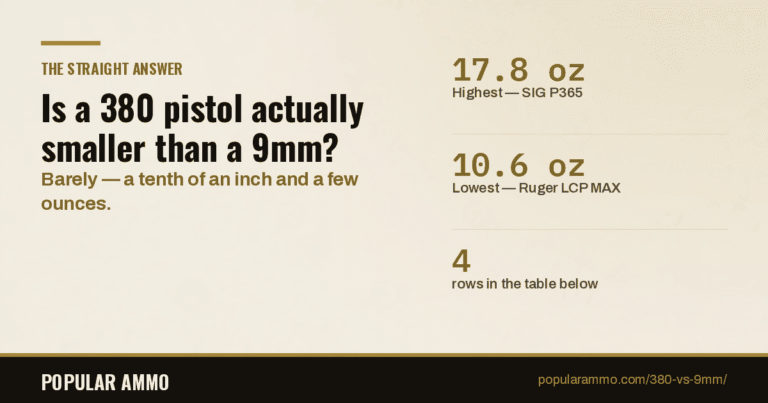
9mm wins on the numbers — 1.63 times the pressure ceiling, roughly 1.8 times the energy once barrel length is controlled. But the comparison is measured dishonestly at the source, including by SAAMI and by the ammunition makers, and almost nobody says so.

A 300 Blackout round will chamber in a 5.56 barrel and destroy the rifle — that is the one fact in this comparison that is not a preference. Under SAAMI both cartridges carry an identical 55,000 psi ceiling, and SAAMI tests them in barrels eight inches apart.
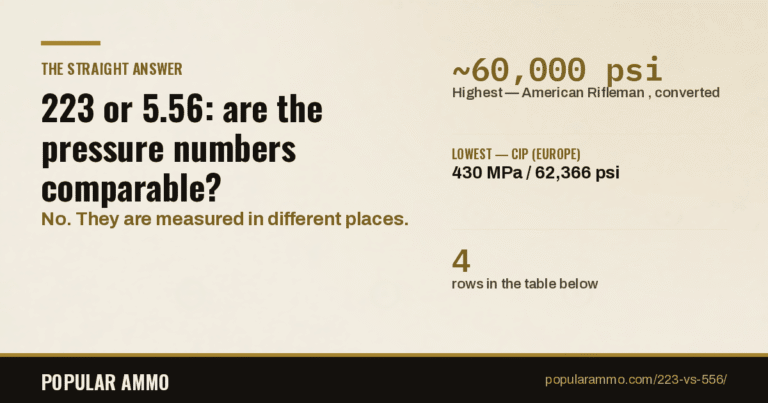
The pressure figures used to compare .223 Remington and 5.56 NATO come from three standards measuring at three different points, and CIP rates .223 at the exact number cited as proof 5.56 is hotter. The real difference is 0.077 inches of chamber leade — plus what happened when a lab actually measured it.
Caliber comparisons, load data, price and availability checks, and what changed in the law — for shooters, hunters and reloaders.
Published by Brand Avalanche Media, Inc.
Caliber comparisons, price checks and law changes — delivered free to your inbox.
Subscribe Free