45-70 Ammo: The Three Pressure Levels Explained
Every 45-70 round fits every 45-70 rifle; not every round is safe in one. The three pressure tiers, in the ammunition makers’ own published words.

Every 45-70 round fits every 45-70 rifle; not every round is safe in one. The three pressure tiers, in the ammunition makers’ own published words.

One 44 Magnum load runs 1,466 fps from a 4-inch revolver and 1,935 from a 20-inch carbine. Published ballistics, barrel lengths and firearm restrictions.

Why 30-30 bullets are flat-nosed, what elastomer tips changed, and the published ballistics for every current load — with the test barrels named.

A shell too long for your chamber still fits — and raises pressure. Shot sizes, published loads, and what federal law actually requires for waterfowl.

A 3-inch 20 gauge shell buys payload, not pressure — SAAMI rates both lengths the same. Published loads, slugs and how it really compares with 12.

Every published 6mm ARC figure comes from a 24-inch barrel. Full trajectory tables, all eleven factory loads, and what a shorter barrel actually costs.

No maker publishes recoil, so we computed it from SAAMI’s own formula — and printed every input beside every answer, so you can check the arithmetic.
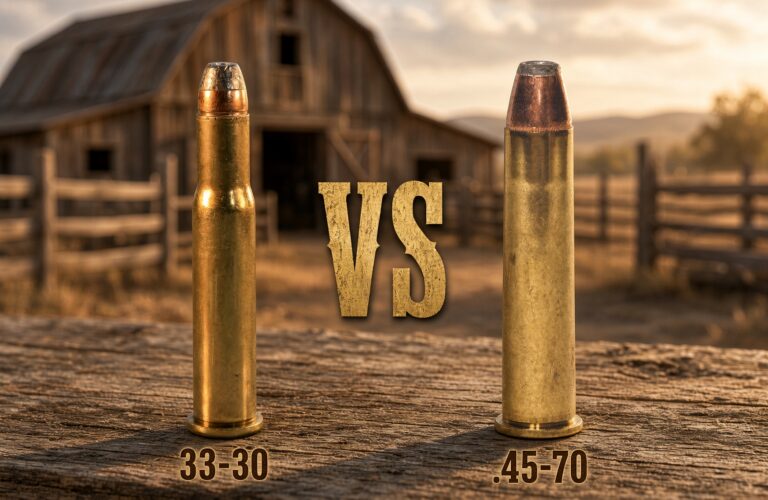
The .30-30 runs at higher pressure than the .45-70, and by 300 yards a tipped .30-30 matches it for energy. What the published figures actually say.

Both are loaded to almost the same pressure — 35,000 psi against 36,000. The .44’s advantage is bullet weight, not intensity. Published figures throughout.

SAAMI uses the word “caliber” eight times and never defines it. What the number actually measures, why the bullet is always wider, and where the rule breaks.
Caliber comparisons, load data, price and availability checks, and what changed in the law — for shooters, hunters and reloaders.
Published by Brand Avalanche Media, Inc.
Caliber comparisons, price checks and law changes — delivered free to your inbox.
Subscribe Free